


What Is Patina on Leather?
Patina is the leather's record of use – it doesn't appear on its own, it comes from being used. How it develops, which leather gets it, how long it takes – and what to do if it gets to be too much:
How does patina develop?
Three things happen: the natural oils from your hands and from care products spread through the leather – where it's touched often, it becomes saturated and deepens in colour. Friction gently polishes the surface – edges and grip points start to shine first. And marks – scratches, drops, stains – gradually blend into the overall look instead of standing out on their own.
Patina is never finished: it absorbs old marks and picks up new ones. As we'd say in Swabia, the leather gets schrappig – worn in, with a lived-in character. That's why leather that has been used for years looks like it has lived. Wear makes things less – patina makes leather more.
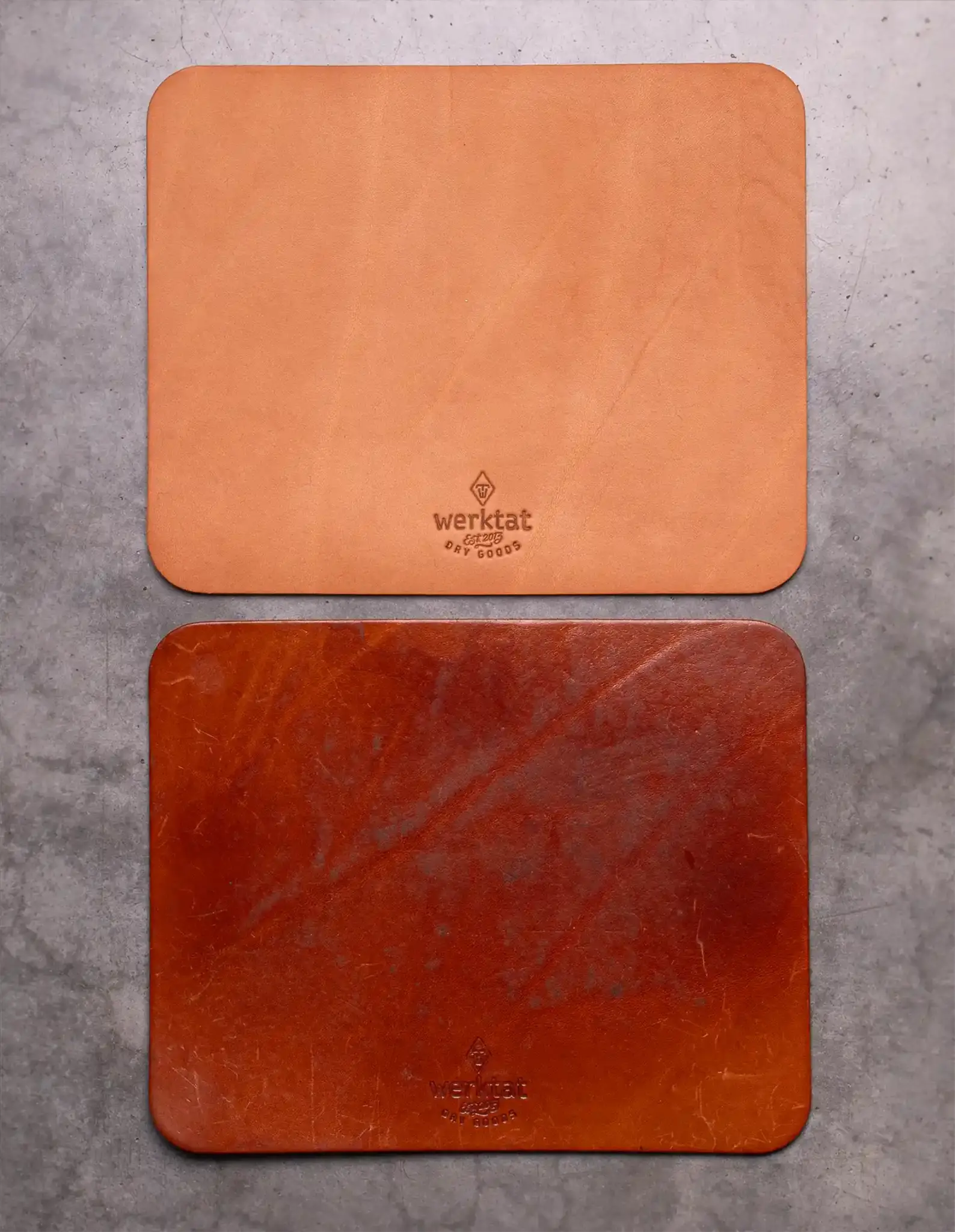
Patina compared: the same leather mouse pad in light brown (natural) – top: new, bottom: after about three years of daily use.
Which leather develops patina – and which never does?
People often say it depends on the tanning. It doesn't – what matters is the surface. If it's sealed, lacquered or coated with plastic, nothing gets into the leather and nothing gets out: coated leather doesn't age, it just wears out. That's how most furniture and car leather is made.
Our leather isn't sealed, it's open. It either develops a particularly beautiful patina – like our vegetable-tanned leather and waxed cowhide – or it already comes with one straight from the workshop: water buffalo leather.
How long does it take for patina to develop?
It's not about the calendar, it's about use: how often the leather is handled, how much skin oil it gets – and whether it's polished along the way, for example by rubbing against soft, smooth surfaces. A mouse pad that's under your hand every day shows clear patina after just six months. A piece that sits in the cupboard stays the way it is – patina doesn't come from time, it comes from use.
Can you speed up patina?
Darker is quick: sunlight makes open leather darken fast, and so does leather grease. But that doesn't create patina, just an even tint – patina lives from light and dark areas side by side. On top of that, leather grease makes the fine surface scratches disappear, and for us those are part of the patina. So there's only one way to real patina, and it's the slow one: use it.
Patina or dirt – and can you remove patina?
Where patina ends and dirt begins isn't a matter of measurement, but of personal taste. If the signs of use get too strong for you, you can tone them down with a damp cloth – as described in our care instructions. And some marks come from nature itself: we've described which natural flaws belong to genuine leather here.
Conclusion
You can't apply patina – you can only live it. It needs open leather, hands and time. What comes of it never looks the same on any two pieces: the record of a single life.


